Showing posts with label 4th grade. Show all posts

Thursday, March 2, 2017

Forest Grove and Bauer Elementary: The Scream

The Scream


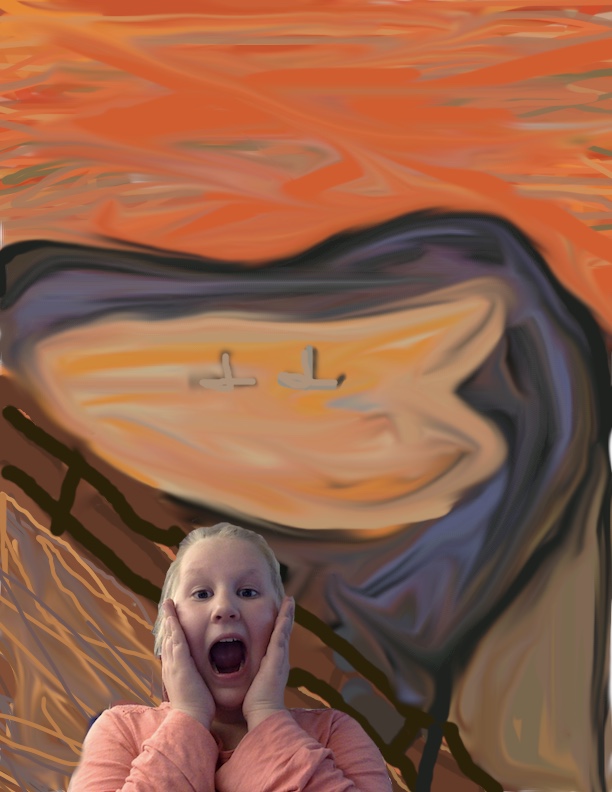
Fourth grade used the program "Acorn" to create their own versions of "The Scream," by Edvard Munch!


Acorn is a simplified (and somewhat glitchy) version of Photoshop. It is great to use with older elementary students because it is so close to Photoshop.


Learning Goals: I can...
- Create a file in Acorn that is US Letter sized
- Use Google Drive to download "The Scream" from a shared folder
- Use Preview to open "The Scream" and to pick colors from the original artwork "The Scream"
- Use Acorn tools and modify size and opacity: Paint brush, bucket, smudge, eraser, eyedropper
- Use Photo Booth to take a picture and insert it into Acorn
- Use layers and change visibility
- Convert Acorn file to JPEG
- Drop JPEG into a shared google folder to submit it.

Tuesday, March 24, 2015

Forest Grove and Bauer Elementary: Kandinsky Music


Wassily Kandinsky was the inspiration for these colorful 4th grade paintings!  In order to learn about Kandinsky we read "The Noisy Paint Box." Wow, this is an awesome book that really gave the kids a better idea of who Kandinsky was.


The kids learned that he was an artist with synesthesia. A condition in the brain where color and sound are connected.  Kandinsky could hear color as music, and see color when listening to music. He is also considered to be the father of abstract art.  We combined the theme of music with an abstract background full of shapes and colors.

First we practiced drawing the instruments on the back of our paper.  Then we turned the instruments into a composition of 3-4 instruments with at least one pair overlapping. 


After drawing final compositions onto the front of their papers, students did a serious study of the color wheel... complete with pre and post test.  In addition to mixing their own colors, students were also asked to connect color mixing with math and fractions!

Here is a sample of the way we approached color mixing with math:


Color mixing is a practical application for fractions.  If you don't use the right proportions of each color you just don't get the exact color that you want!  For instance, when making green, if you use too much blue (a dark, powerful color) it's very hard to add enough yellow (a light, weak color) to create green.  The kids were asked to remember to use two double scoops of the lightest color (4/5) and one tiny dab of the darkest color (1/5).  We used these measurements as guidelines.  The kids also learned the difference between indigo and violet (indigo is mostly blue while violet is closer to red on the color wheel.  When you combine them you get purple).  

Each student mixed their own colors on a color wheel worksheet (painters palette):

Students used popsicle sticks (our makeshift serving spoons) to scoop the primary colors out of the paint trays and onto their mixing worksheets. Then they used their brushes to do all the mixing on the sheet.  This was the first project that I have used this method for, and I loved being able to have ALL the kids in charge of making ALL of their own colors!  Whenever they ran out of a secondary color they had to problem solve to match the original color again! I think this helped the kids learn the color wheel very well. 


We started with only primary colors...


Then the kids added their secondary color mixtures.  The kids tried not to have shapes of a like color touching.  This created even more problems to solve!


This was a project with so many layers of learning and problem solving! It is definitely one I will use in the coming years!

We wrote a simplified version of the learning goals listed below on the back of our art for parents to see what we're learning!

Learning Goals: I can...
- Tell about Kandinsky
- Create and abstract background using regular and irregular shapes
- Create a composition with at least one set of overlapping instruments
- Name the primary and secondary colors
- Use fractions to communicate how to mix primary colors to make secondary colors
- Explain the difference between indigo and violet
- Use good craftsmanship when painting smooth edges and outlines
- Create contrast (as opposed to camouflage) by using different colors in shapes that share a side


Tuesday, January 20, 2015

Jamestown Elementary: 4th Grade Abstract Kandinsky Murals

4th grade artists studied the abstract art of Wassily Kandinsky. The learned about his life and artwork. They even learned about a strange condition that he had called synesthesia cognate. This condition is one that a person's senses get mixed up and he/she can hear colors and see sounds. Because of this, he would always paint while listening to music. We worked individually to create our own personal abstract artworks while listening to music. We then as a group, worked together to choose a color scheme and combine our smaller works into collaborative large abstract murals!


Friday, September 12, 2014

Jamestown Elementary: Welcome Back Mural!


WELCOME TO THE JAMESTOWN ELEMENTARY ART ROOM!

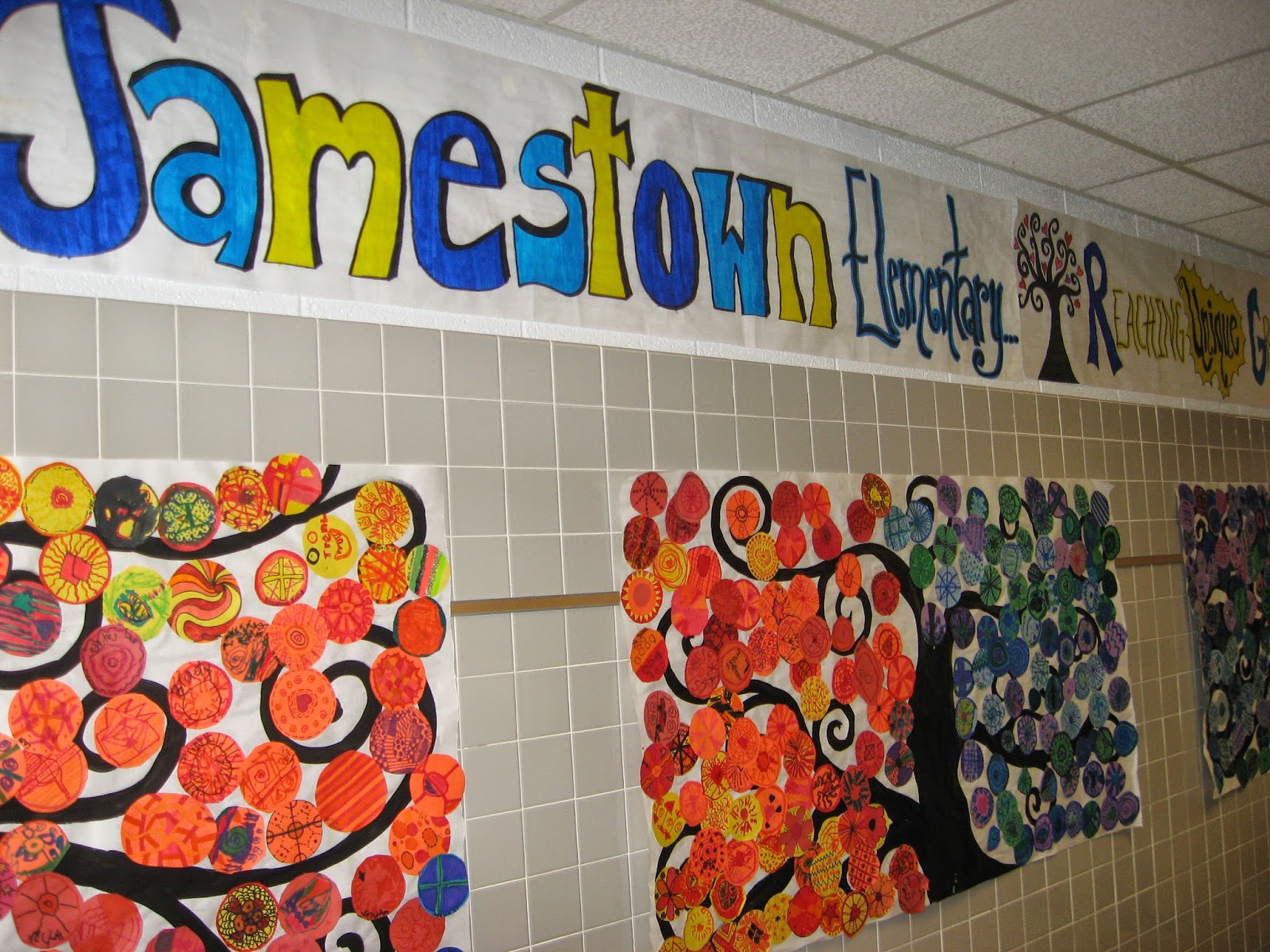
As always, this year on the first day of school, we began with an all school project that every grade level participated in. We created a mural of a tree where each student contributed their own uniquely patterned leaf to the branches. We reviewed the art elements in our designs focusing on: line, color (warm and cool), shape, space, pattern, and value.

Our theme as a staff this year is: Jamestown Elementary: "Reaching our unique growth potential." 
As a tree grows, we grow each day, and we are all unique (just like our leaves). Our goal is to do our best and to reach our unique growth potential.


Learning Goals: I can...
- Explain what a mural is
- Use art to create a welcoming environment
- Collaborate with other students on a group project
-Use the art elements effectively in my artwork


Thursday, September 11, 2014

Georgetown Elementary: What's YOUR Name?

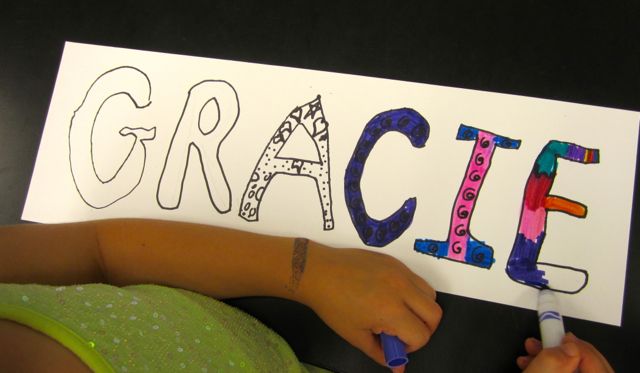
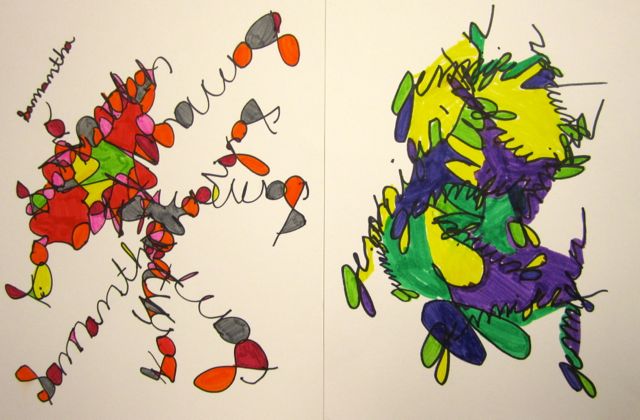
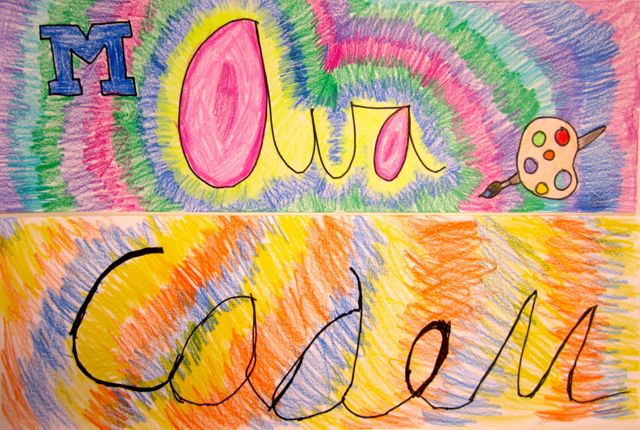
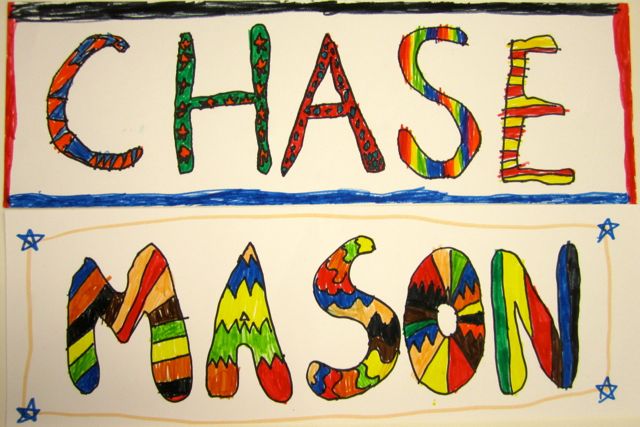
Georgetown Elementary's first art projects this year are all about NAMES!  Each grade level learned a different way to write their name – 1st and 2nd grades wrote in BUBBLE LETTERS, 3rd grade was challenged with BLOCK LETTERS, and grades 4 and 5 were excited to practice writing their name in CURSIVE.  Students then added the art elements of line, shape, and color to turn their names into a work of art.
IMG_3862 IMG_3869
Grades 1 & 2 bubble letter designs
IMG_3872
 Grade 3 block letter designs
IMG_3867 IMG_3871
Grade 4 cursive writing designs
IMG_3870
Grade 5 cursive writing designs
We also spent some time looking at how other artists use words and letters in their art pieces.  We looked at the words that Faith Ringgold includes around her Story Quilts.
ringgoldsunflowers
Andy Warhol's "100 Cans" and Juan Miro's "Hirondelle/Amour" also brought some interesting discussions about the way artists use words in their art making.


"I Can" Goals
I can write my name in block, bubble, or cursive letters.
I can talk about different works of art.
I can use the art elements of line, shape, and color to create a work of art using my own name.

Tuesday, April 1, 2014

Georgetown Elementary: Mondrian + Kandinsky = ABSTRACT ART!

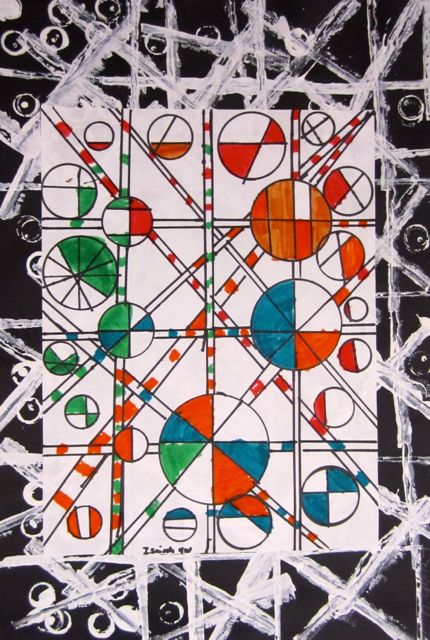
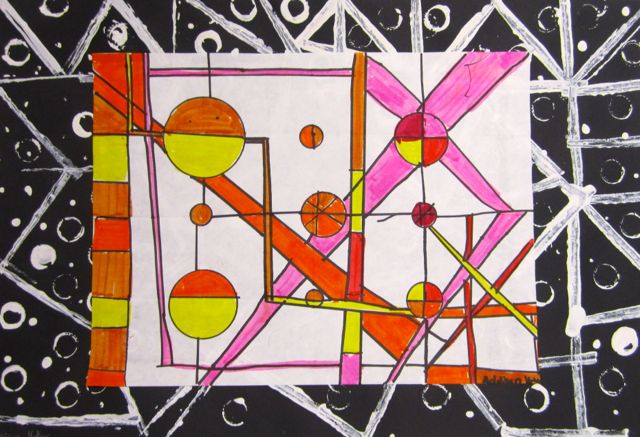
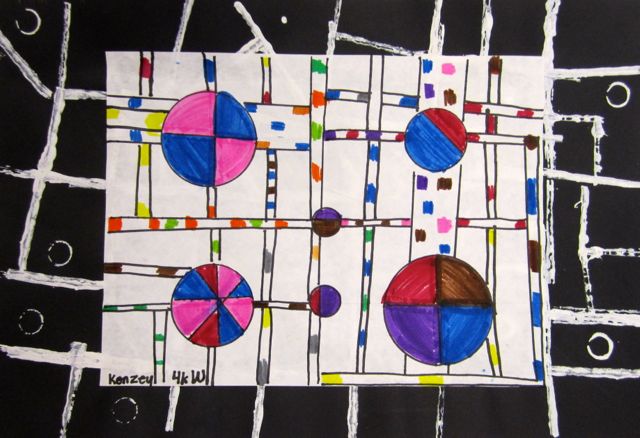
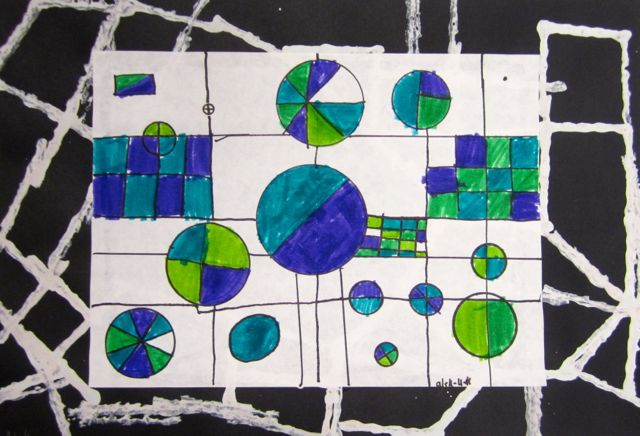
Georgetown fourth grade artists have really been flexing their art muscles this month!  Their latest creations combine their understanding of the abstract art of Mondrian and Kandinsky, plus their recent study of color families, AND our school goal of improving number sense and fractions.  Whew!
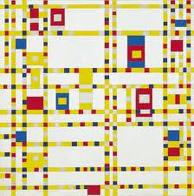
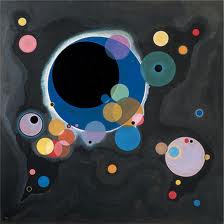
After viewing work by Mondrian and Kandinsky, students discussed how both artists might have divided up their picture space as they created “Broadway Boogie Woogie” and “Several Circles No. 323″.
Broadway Boogie Woogie  Kandinsky-Several Circles
Students folded their paper into halves, thirds, and quarters and carefully planned where to place their lines and shapes to create a strong abstract composition.  Color was added after considering color families, and a printed border pulled their pieces together.  The final result?  Stunning!
IMG_2001 IMG_2002 IMG_2003 IMG_2362 IMG_2364 IMG_2371 IMG_2397 IMG_2399

Learning Goals - I CAN:
  • Recognize the abstract work of Kandinsky and Mondrian
  • Understand that artists create abstract art to show emotion and feeling through color, line, and shape
  • Use understanding of fractions to divide picture space into a visually pleasing composition
  • Add color using color family combinations
See more of these abstract pieces at our ARTSONIA on-line art museum!